
Kurt
An Arabian stallion started getting up and lying down over and over. The system flagged it in six minutes, while it was still happening — and then watched him recover.
Report current as of 9:25 PM CDT, Wednesday September 16, 2026
- Horse
- Kurt · Arabian stallion
- Owner
- Rhein Standish
- Location
- Boisvert Farms
Port Allen, LA - Alert
- Restless lying
Severity: high - Raised
- 3:13 PM CDT
What happened
Three times down and up inside ten minutes
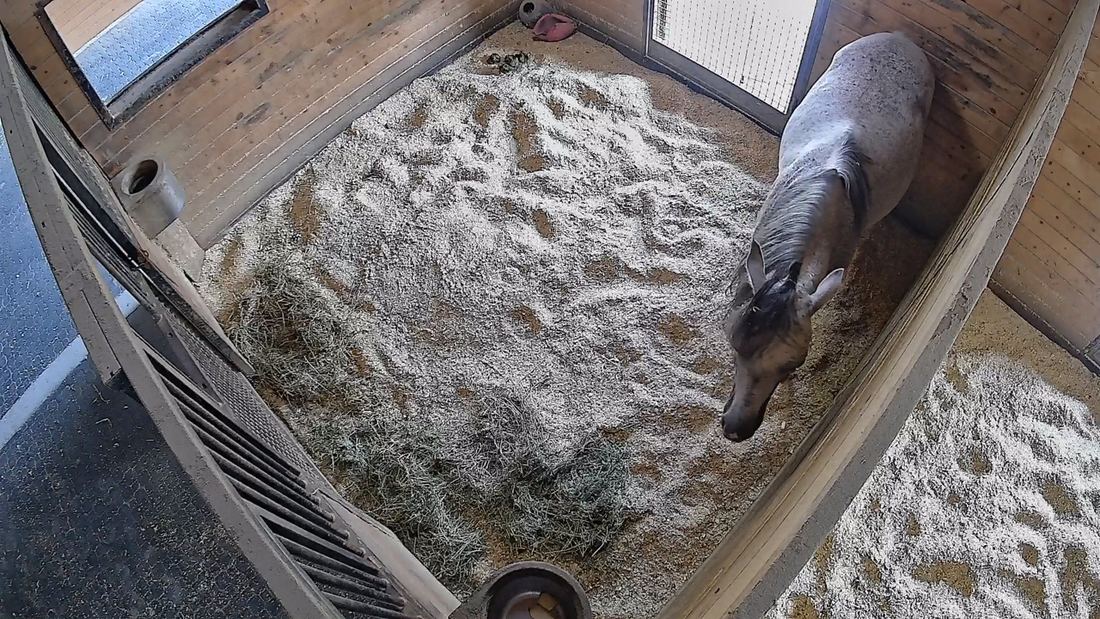
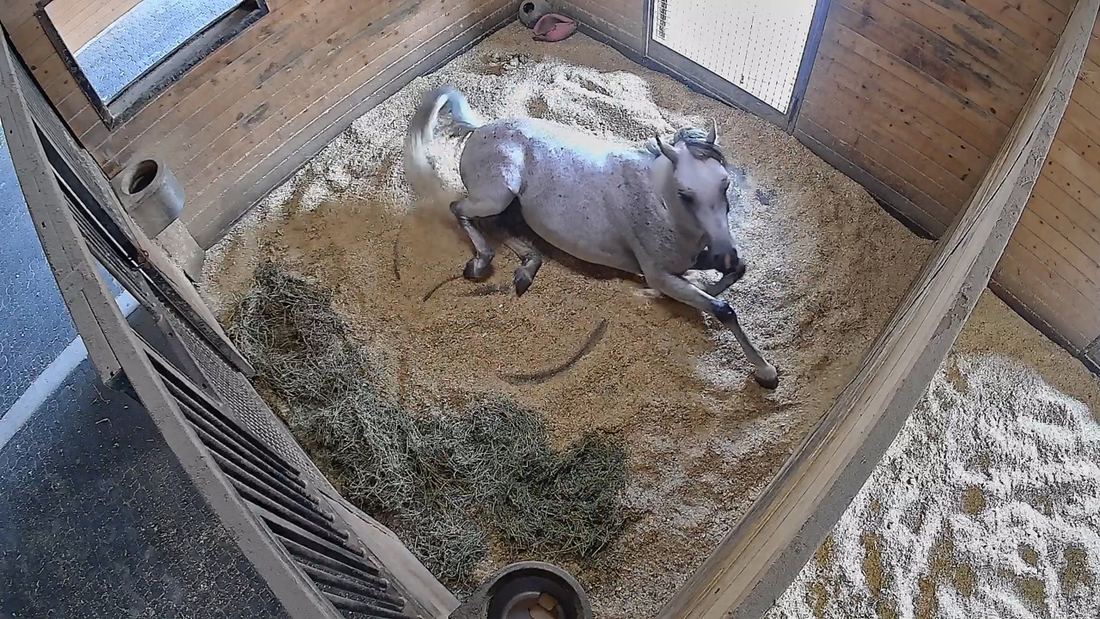
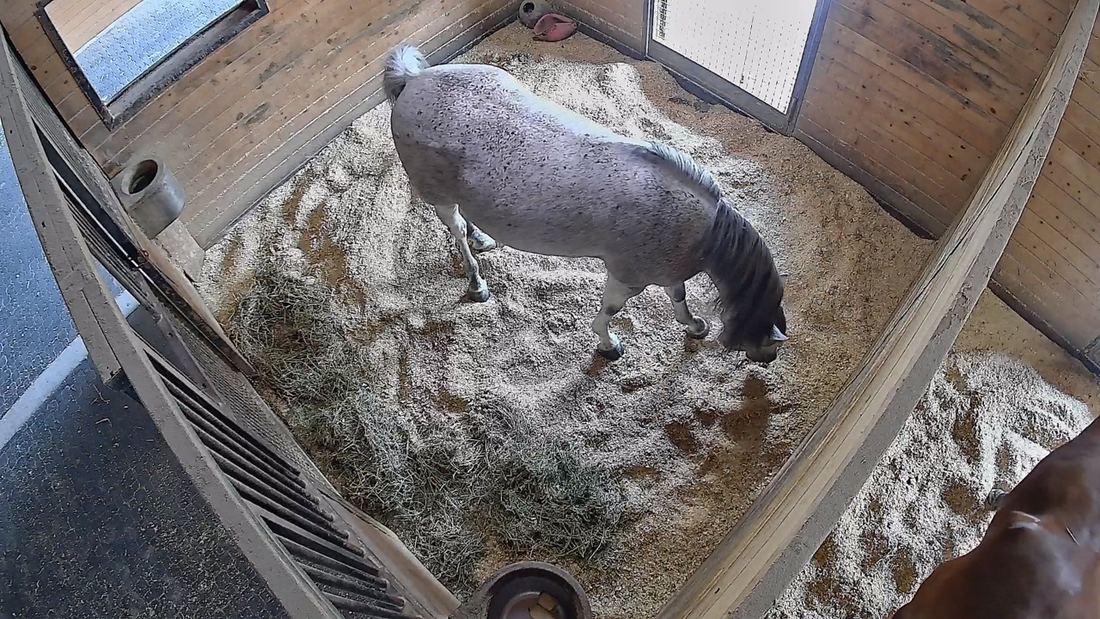
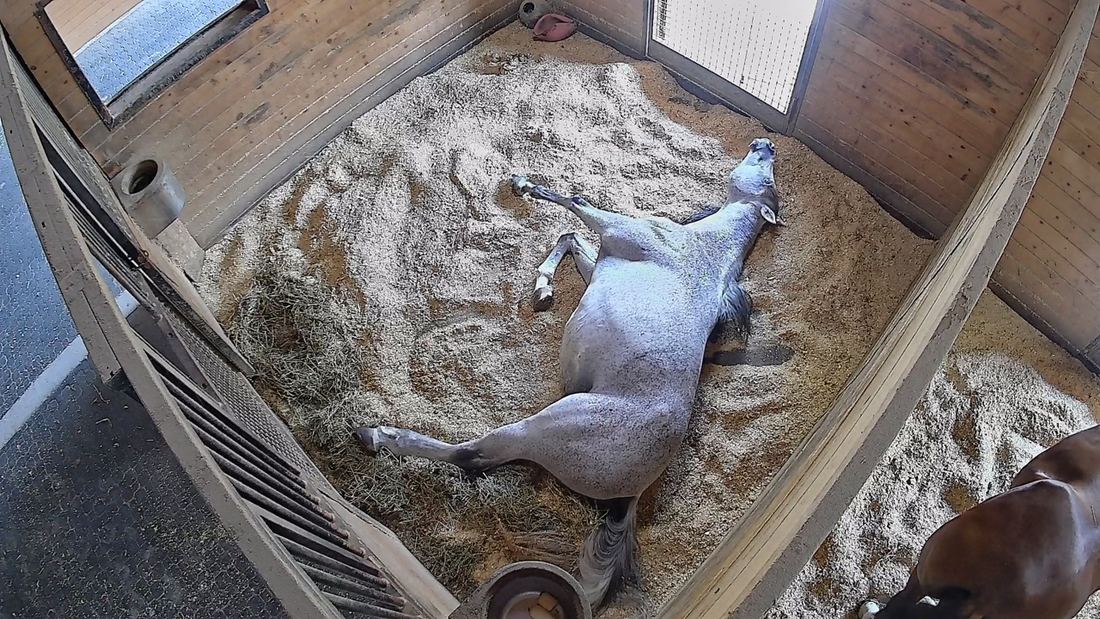
A healthy horse that lies down to sleep stays down. A normal sleep cycle produces one or two changes of posture over thirty to forty-five minutes. Kurt went down and got back up three times in ten minutes, at 3 PM — nowhere near a sleep window.
That is the threshold the system watches for, and it was met exactly. The alert was raised at 3:13:51 PM, six minutes after the first posture change, with five photographs already attached.
Restless lying is one of the earliest visible signs of abdominal pain. A horse in discomfort cannot find a position that helps, so it keeps changing. It is visible long before sweating or rolling, and the first hours are the ones that matter.
The system does not count a posture change unless the horse actually moved. A separate check compares the horse's outline between frames and discards changes where the animal is in the same place and the same shape — those are tracking noise, not a horse getting up. On this episode, none of the three were discarded. All three were real.
The sequence
What the camera recorded
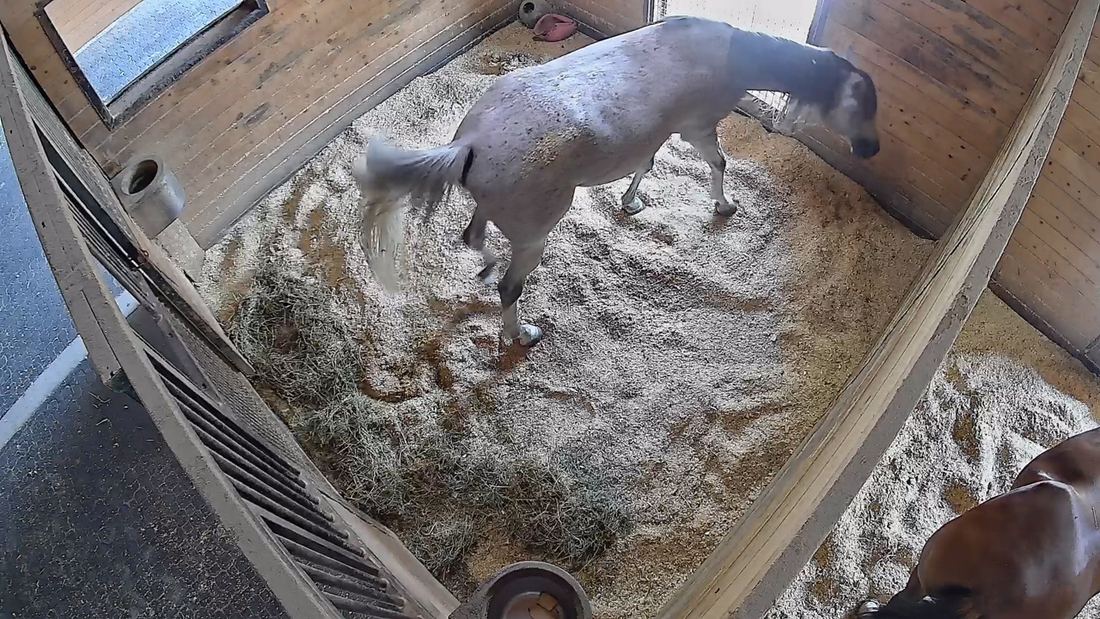
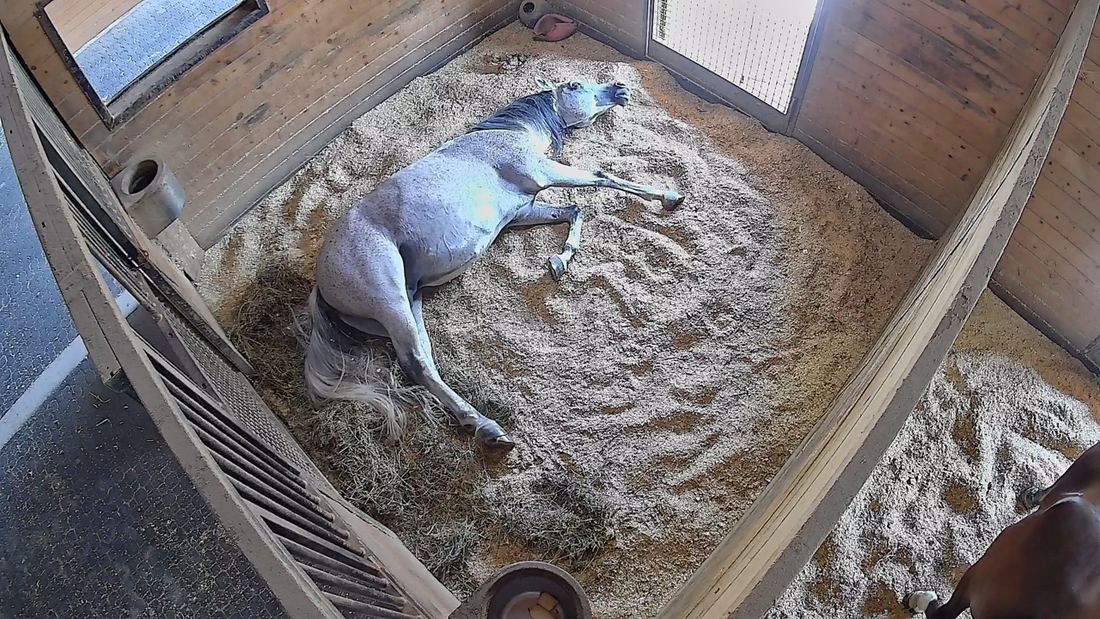
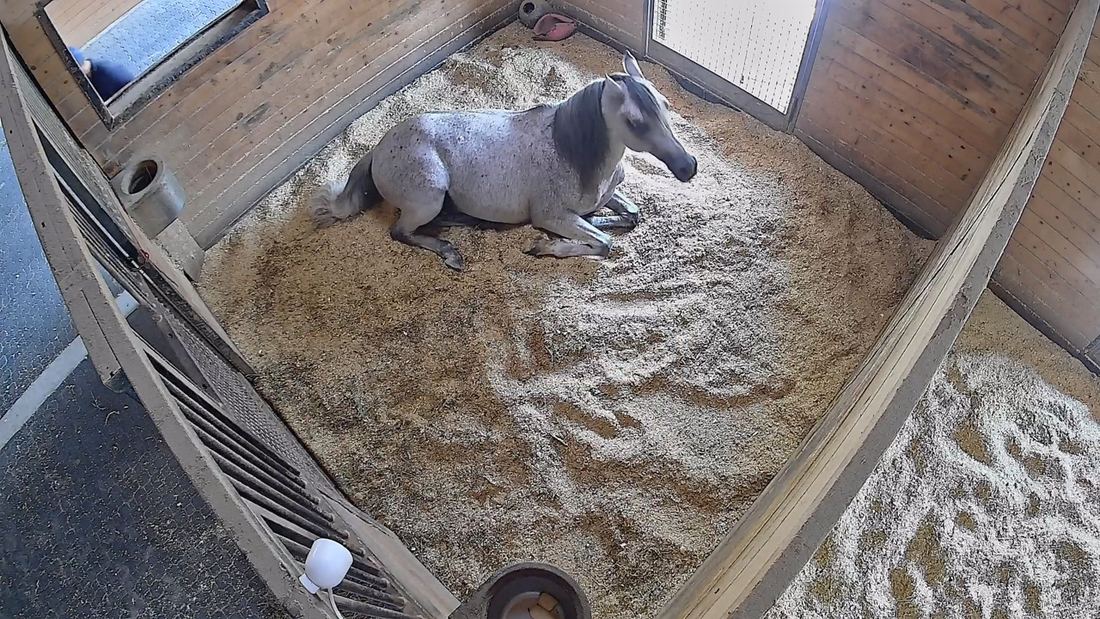
These are the frames the system attached to the alert, unretouched, in order. Look at the bedding in the second one: the swept arcs around him are the trace of a horse that has been moving on the ground.
It did not stop there
The pattern ran for another fifty minutes
The alert fired on the first three cycles. The behaviour continued well past it — nine changes of posture in under an hour — and then the farm stepped in.
What the owner was told
The alert explains itself, in plain words
Atlas Alert does not send a code or a number. The server writes the explanation and the app displays it. This is the text that was generated for Kurt, exactly as it was written:
Alert · Kurt · high severityKurt is getting up and lying down repeatedly — possible colic
He has gone down and up 3 times in the last 10 minutes (normal sleep cycles produce 1–2 transitions over 30–45 minutes).
Restless lying like this is a CLASSIC early sign of abdominal pain — horses with colic cannot find a comfortable position and keep changing posture.
This is happening during active hours (15:00) — restless lying outside of sleep windows is unusual.
Please visit him NOW and check for: sweating, looking at the flank, pawing the ground, rolling, lack of manure. Call your vet if you see ANY of these signs — colic worsens rapidly and the first hours are decisive.
Nothing in that text was written by a person after the fact. It was produced at 3:13:51 PM, by the server, as the alert was raised.
The response
Standard first-line handling for a suspected colic
The farm was contacted and treated Kurt the way a suspected colic is normally handled. Two parts of it are visible in the camera record, and the timing lines up:
The feed came out. Between 3:45 and 4:00 PM, in the middle of the episode, the hay in the stall went from roughly half a serving to nothing, and it stayed at nothing for the rest of the day. Taking feed away is the first thing you do with a gut you are unsure about.
Then he was walked. At 4:12:07 PM Kurt left the stall, and at 4:21:20 PM he was back — ten minutes exactly. Walking a horse that may be colicking keeps him moving and discourages him from going down and rolling.
The stall itself had been mucked out at 2:44 PM, half an hour before the first posture change — which matters for a reason that comes up further down.
Afterwards
Three signs, and the camera caught all three
The alert told the owner what to watch for. Over the following five hours the system recorded the answers on its own, without anybody asking it to.
He stayed on his feet
5 hours
From 4:21 PM to now, every single presence check has found him standing. After nine changes of posture in one hour, he has not lain down once.
He drank
4 visits
To the waterer between 4:39 and 8:01 PM, roughly half a minute each — about two minutes of drinking in total.
He passed manure
7:59 PM
The manure in the stall doubled in one step. Because the stall had been mucked out at 2:44 PM, what the camera measured afterwards is new.
Lack of manure was on the list the alert asked the owner to check for. A gut that starts moving again is the sign everyone waits for with a colic, and the same camera that raised the alarm is the one that recorded it happening.
None of these three are dramatic on their own. A horse standing, a horse drinking, a horse passing manure — on any ordinary day nobody writes them down. They matter here because of what came before them, and because there is a continuous record to place them against.
What this says about the system
The camera does not get tired at 3 PM
Nobody was watching that stall at 3:07 in the afternoon. There was no reason to: Kurt had been standing quietly all day. The pattern that mattered was not a single dramatic moment — it was five postures in five and a half minutes, which only reads as a warning if something is counting.
And the same is true of the hours after. The farm knew Kurt was better because they were there. The record of how he got better — when the feed came out, how long he was walked, when he drank, when his gut started working again — exists because a camera was still watching at eight in the evening.
That is the whole proposition. Not a better pair of eyes than the owner's — a pair that never looks away, and that knows what thirty days of this horse's own behaviour looks like, so it can tell when today is different.